Numerical Modelling

Why Continental Fragments Form During Ocean Opening

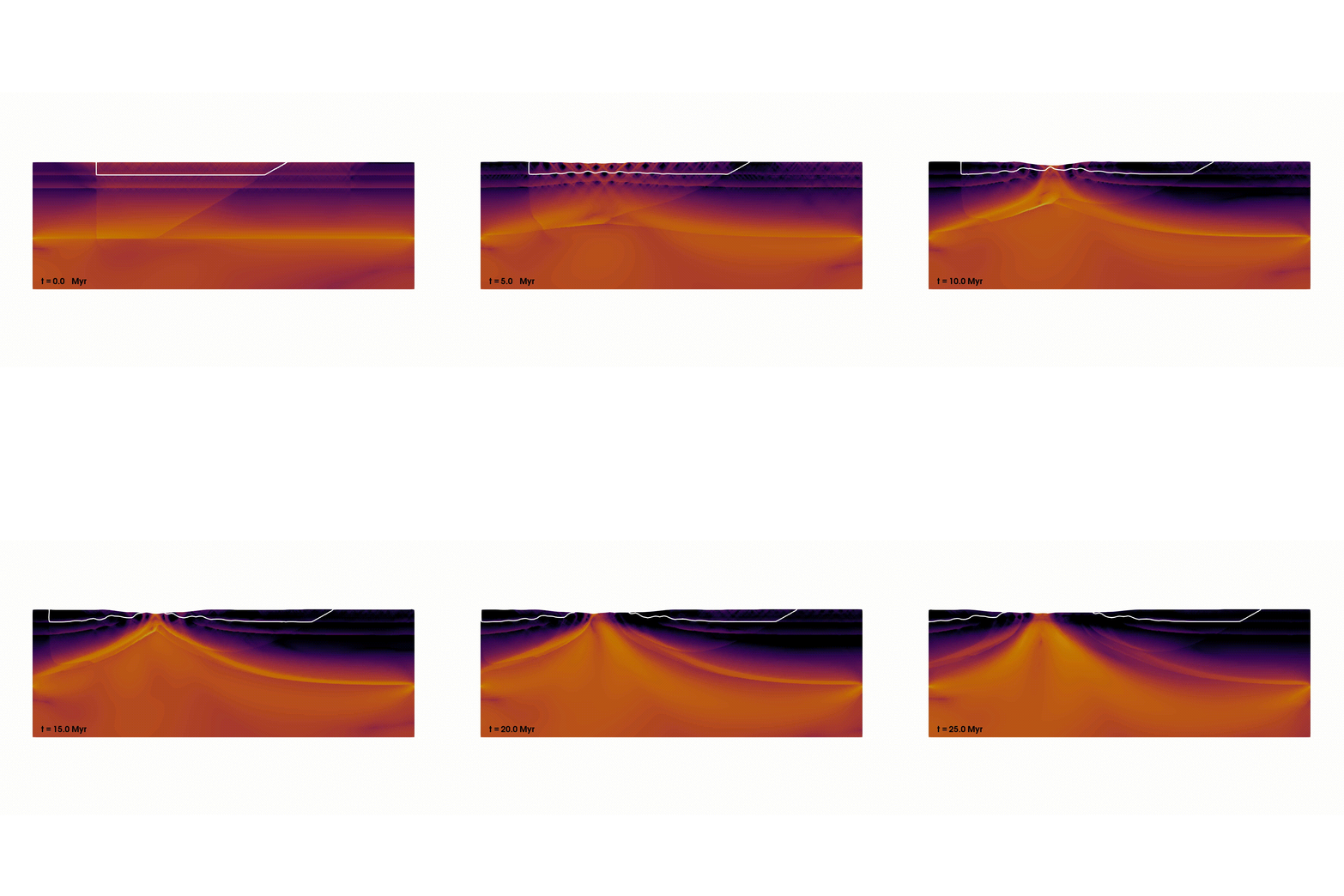
As a new ocean opens, a sliver of continent can break away from its parent plate. To understand why this happens, we ran nearly 100 supercomputer models of continental rifting. Our results show that pre-existing structures in the lithosphere are the main control on fragment width, while temperature also influences how the rift evolves.

See publication

Reconstructing Early North Atlantic Breakup

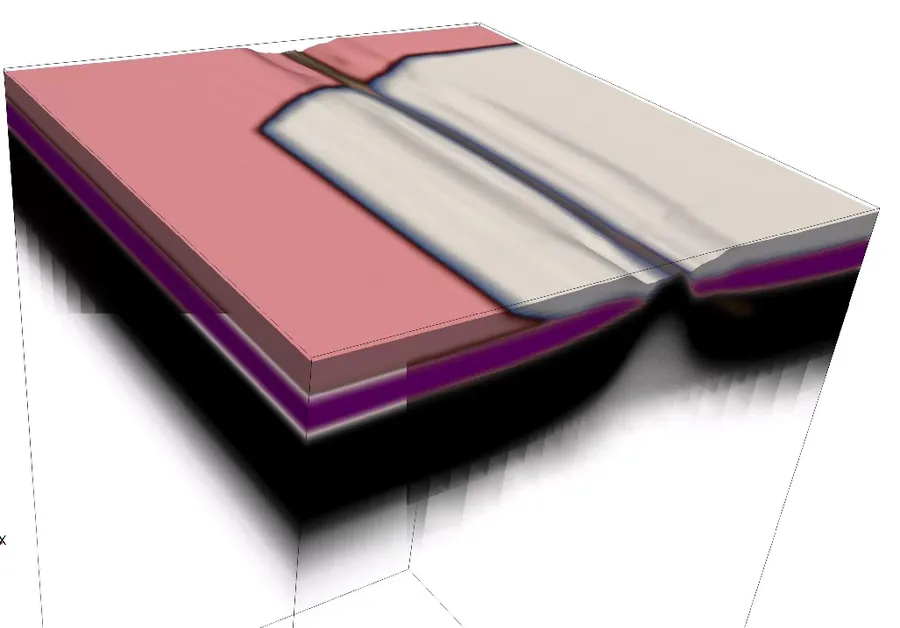
About 60 million years ago, rifting between Greenland, Canada, and Europe opened the early North Atlantic Ocean. One open question is why a sliver of Greenland's crust ended up on the Canadian side. Using 3-D rift models, we tested how deformation from old mountain building processes influences the final breakup geometry.

See publication

Glacial Geology

Lake Sediments: Ice-Age Change or Ancient Earthquakes?

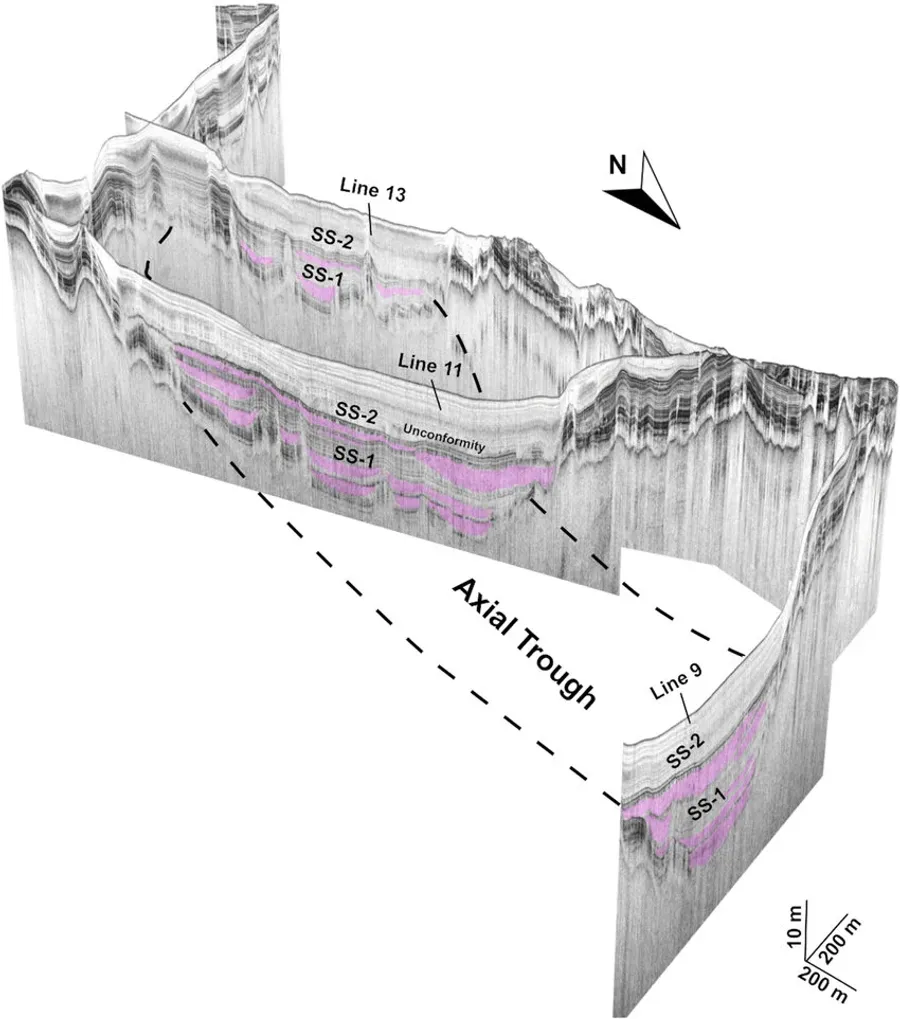
Western Quebec is earthquake-prone, but modern records are too short to capture long-term risk. We analyzed seismic reflection data from an ancient glacial lake and identified sediment layers that track environmental change as the ice sheet retreated. We also found disturbed layers that may record either past earthquakes or pulses of glacial meltwater and sediment.

See publication

Testing seismic surveying equipment in the Valley

Seismic surveying images the subsurface with sound waves. In this field test, we used a hammer source: each strike on a steel plate generated a signal, and geophones along a profile recorded its travel through the ground. By comparing first arrivals and reflections, we estimated the depth and physical properties of the underlying layers.

Read more

Tracing Glacier Flow with Bedrock Grooves

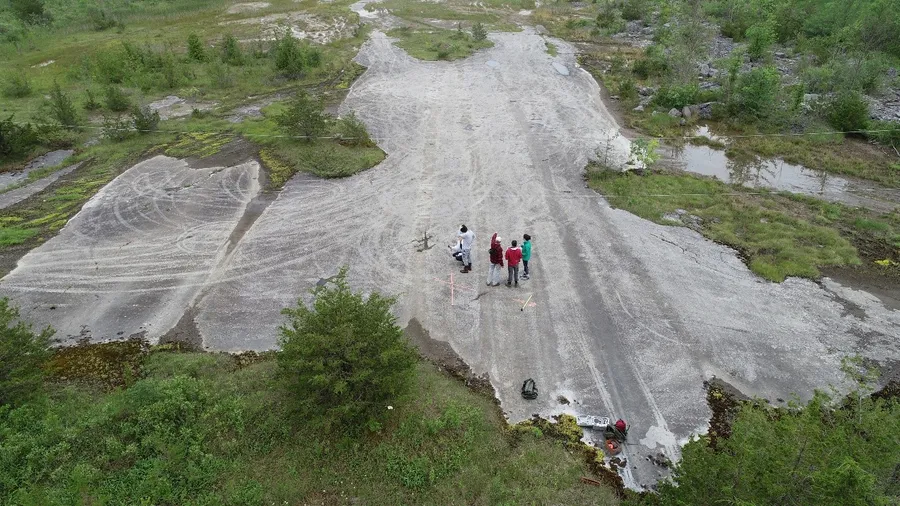
Large grooves carved into bedrock preserve a clear record of past ice motion. In Odessa, Canada, we mapped and measured these features to reconstruct regional glacier flow. Their orientation indicates a southwestward advance of the Ontario Lobe during the last glacial cycle, followed by a later northwestward retreat.

Read more